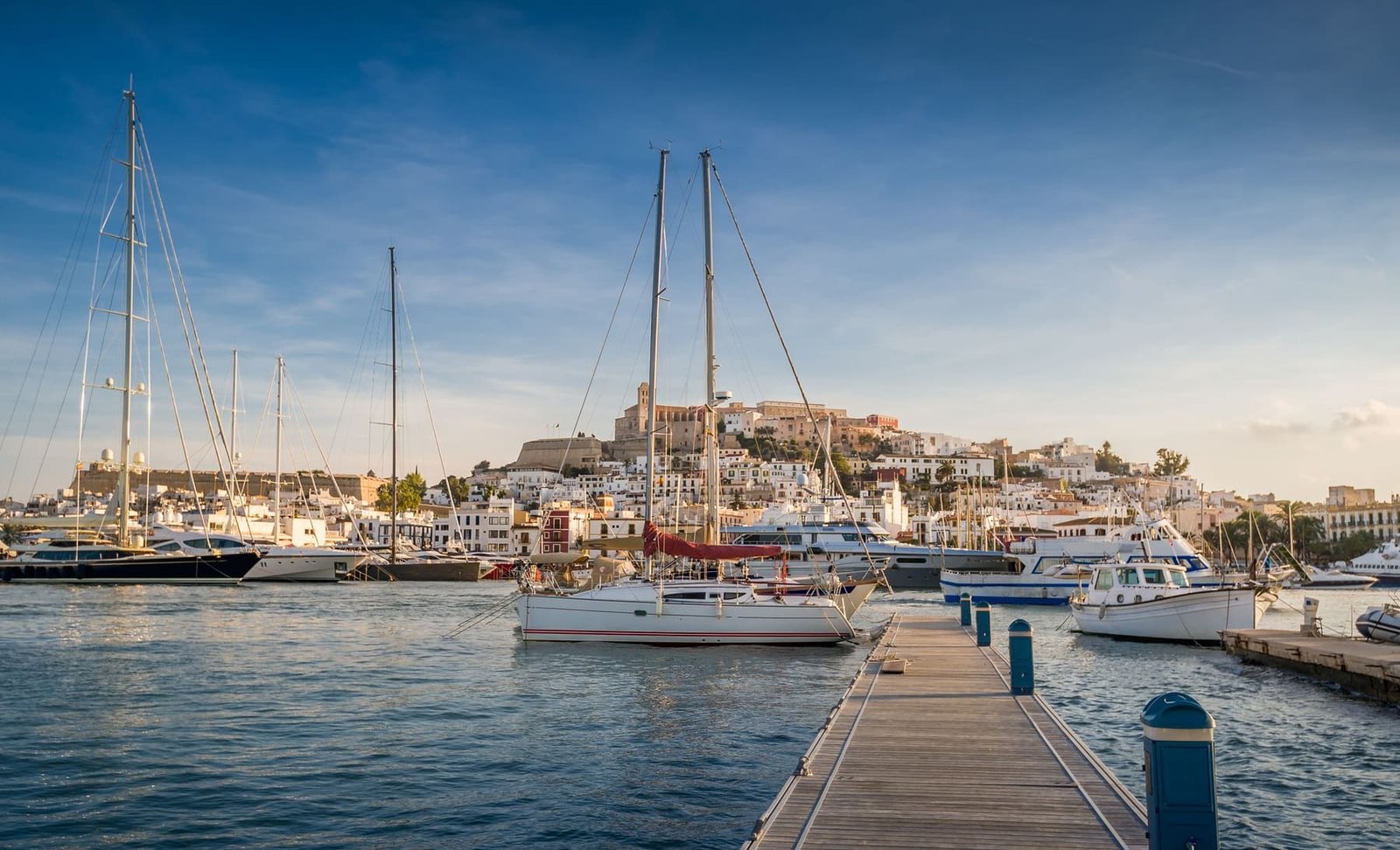
Sail to hidden coves along the Ibizan coast
Beyond the reputation, Ibiza is a small island ringed with pine-backed calas that most visitors never reach, and a UNESCO-protected seagrass meadow that keeps the water improbably clear.
The clarity has a specific cause: Posidonia oceanica, a seagrass endemic to the Mediterranean, carpets the seabed between Ibiza and Formentera. It filters the water, stabilises the sand and is UNESCO-listed. One colony here has been dated at around 100,000 years old, which makes it among the oldest living organisms on earth.
A boat is the only way to reach the better coves. The northern coast around Portinatx and Benirràs is quieter and more rugged; the western side runs down toward Cala d’Hort and the view of Es Vedrà, the limestone islet that rises 400 metres straight out of the sea.
Most days include a crossing toward Formentera, where the sandbanks make the water an implausible pale turquoise, and lunch at anchor rather than ashore.
Good to Know
Availability, exact timings and pricing depend on your itinerary, hotel and season — your Finders & Keepers Safaris specialist will confirm details and slot this experience into your existing day-by-day plan.
Anchoring rules exist for a reason
Dropping anchor onto Posidonia is illegal and heavily fined — licensed skippers use marked sand patches or buoys, which is one good reason to charter properly rather than cheaply. July and August are crowded and expensive; the shoulder months give you the same water and half the boats. Reef-safe sun cream only.