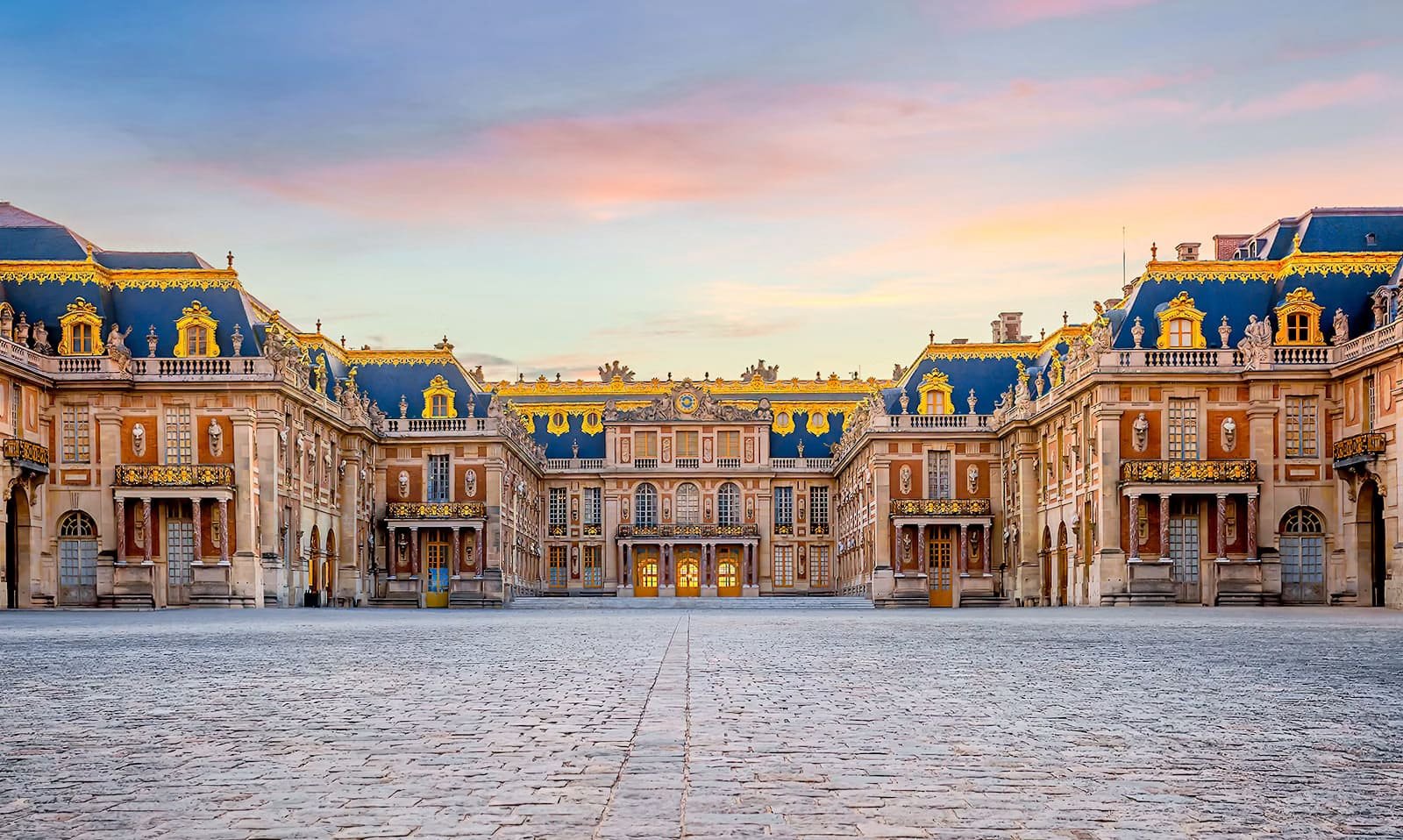
Stand in the Hall of Mirrors before the crowds arrive
Seventy-three metres long, seventeen arched windows facing the gardens and three hundred and fifty-seven mirrors facing them back. Early entry means seeing it close to empty, which is the only way to understand what it was for.
Louis XIV moved the French court out of Paris to Versailles in 1682, and the point of the building was to make the nobility live where he could watch them. The Hall of Mirrors was the route between the King’s and Queen’s apartments, so courtiers stood in it for hours hoping to be noticed. Mirrors on that scale were a Venetian monopoly and ruinously expensive, which was precisely the message.
The same room signed the Treaty of Versailles in 1919, in deliberate answer to the German Empire having been proclaimed in it in 1871. It is not a decorative space with a history bolted on; it is where a good deal of European history was actually transacted.
Beyond the state apartments, the gardens are half the estate and often the better half — Le Nôtre’s geometry, the Grand Canal, and the Queen’s Hamlet, the working model farm Marie Antoinette had built so she could play at rural life.
Good to Know
Availability, exact timings and pricing depend on your itinerary, hotel and season — your Finders & Keepers Safaris specialist will confirm details and slot this experience into your existing day-by-day plan.
Early entry is the entire difference
Versailles takes around eight million visitors a year and by eleven the Hall of Mirrors is shoulder to shoulder. A first-slot or before-hours entry is the difference between a photograph and an experience, and it books out far ahead. The palace closes Mondays. In summer the musical fountain shows run on set days — worth timing to, or avoiding, depending on what you want.