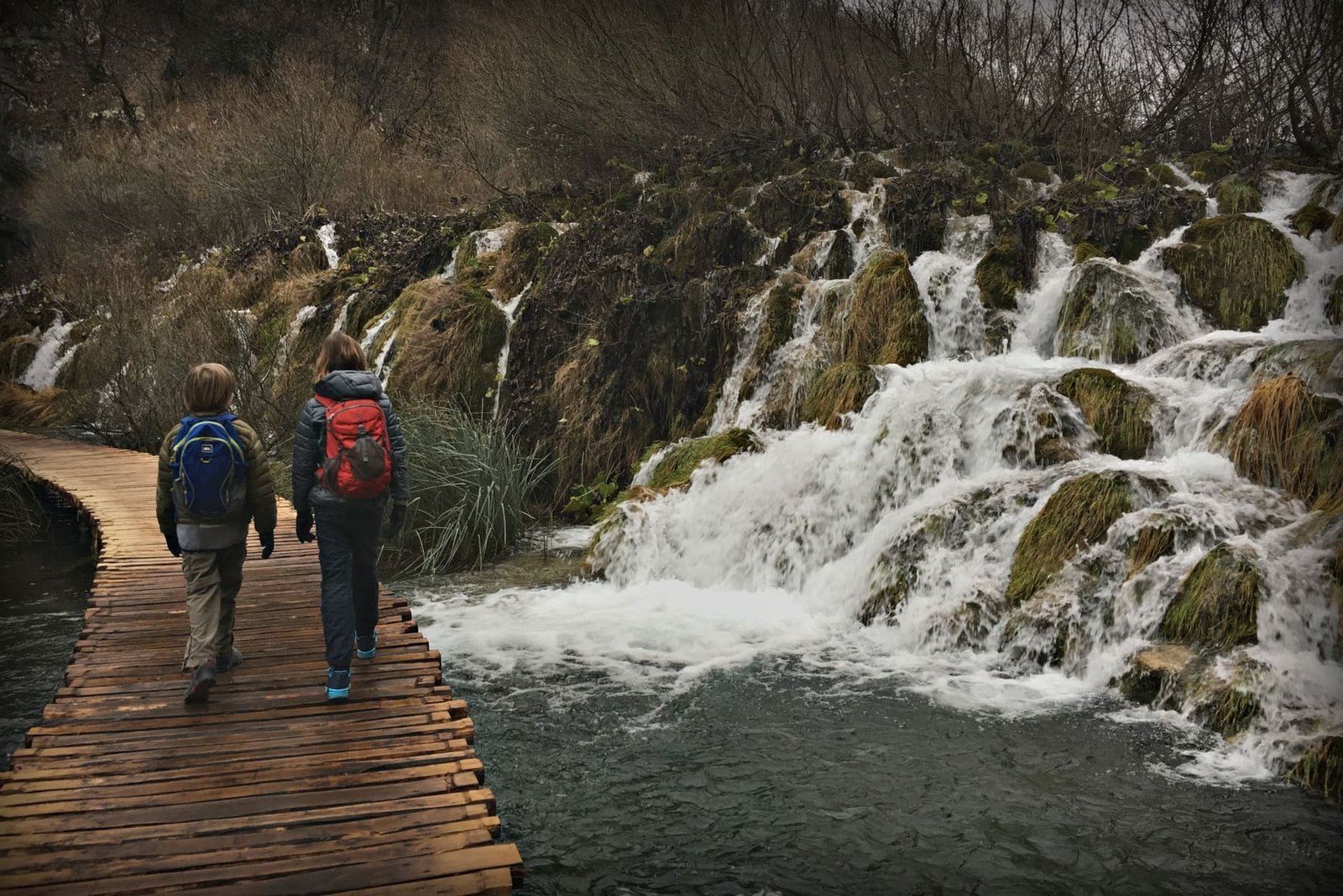
Walk the wooden boardwalks over sixteen emerald lakes
Sixteen terraced lakes falling into one another down a limestone valley, linked by five miles of wooden walkway that runs inches above the water. Croatia’s oldest national park, UNESCO-listed since 1979, and unlike anywhere else in Europe.
The lakes are the product of travertine — a soft rock that grows rather than erodes, laid down by mosses and bacteria in the flowing water. The barriers between the lakes are still forming, which is why the park will look different in a century, and why you are asked to stay on the boardwalk rather than step off it.
The walk splits into an Upper and a Lower section. The Lower Lakes hold the tallest fall, Veliki Slap, at 78 metres; the Upper Lakes are quieter, greener, and where most of the water actually comes from. An electric boat crosses Kozjak, the largest lake, between the two, and a shuttle runs the road above.
Colour is the thing people remember and it is genuinely variable — the water reads turquoise, jade or steel depending on mineral content, light angle and the time of year, and it changes within a single afternoon.
Good to Know
Availability, exact timings and pricing depend on your itinerary, hotel and season — your Finders & Keepers Safaris specialist will confirm details and slot this experience into your existing day-by-day plan.
Go early, and go in spring or autumn
Plitvice takes over a million visitors a year and the boardwalks are single-file in places, so the first entry slot is worth the early start. Spring runs the falls at full volume; October empties the park and turns the beech woods. Midsummer is hot, busy, and the least rewarding time to come. Swimming is not permitted anywhere in the park.