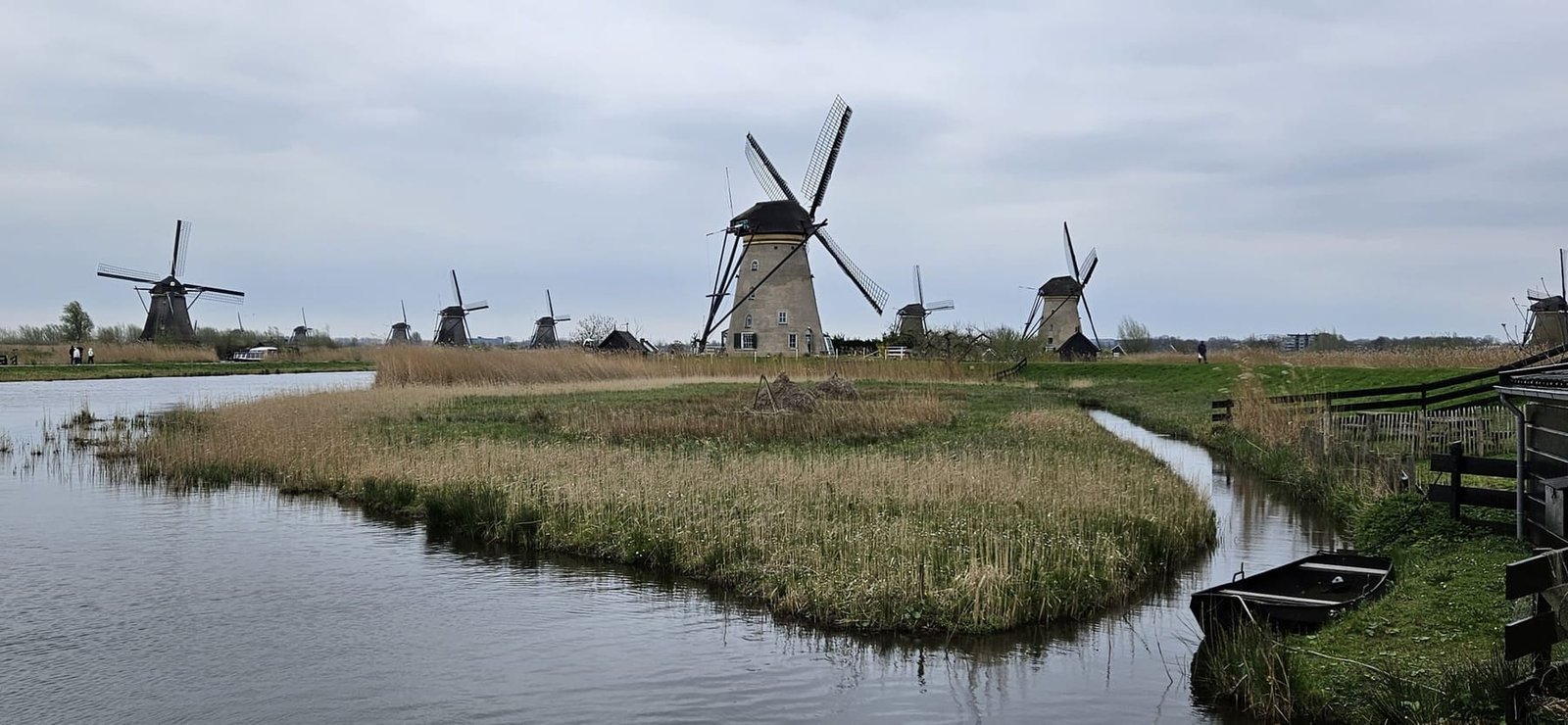
Walk among nineteen UNESCO-listed working windmills
Nineteen eighteenth-century drainage mills standing in a row across the polder, built to keep a piece of the Netherlands from returning to water. They still work, and some are still lived in.
The mills went up around 1740 to pump water out of the Alblasserwaard polder, which sits below sea level, and lift it into a reservoir and eventually the river. They are not decorative; they are pumping infrastructure, and the reason there is dry land here at all. The system is UNESCO-listed as a whole rather than as individual buildings.
Two of the mills are open as museums, furnished as they were when miller families lived inside them — which they did, year-round, in cramped quarters under the machinery. Millers still occupy several of the others, and turn the sails on operating days.
The best way to take it in is on foot or by bicycle along the dyke path, with a boat running between the two arms of the site. Seeing the mills against the flat horizon, all turning, is the thing people come for and it depends entirely on the wind.
Good to Know
Availability, exact timings and pricing depend on your itinerary, hotel and season — your Finders & Keepers Safaris specialist will confirm details and slot this experience into your existing day-by-day plan.
Wind, and the exposed dyke
The sails only turn when there is wind and on designated operating days — ask, because still mills are a different photograph. The dyke path is entirely exposed and the Dutch weather changes fast, so a windproof layer earns its place. Several mills are private homes: the ones you may enter are signed, and the rest are somebody’s front door.