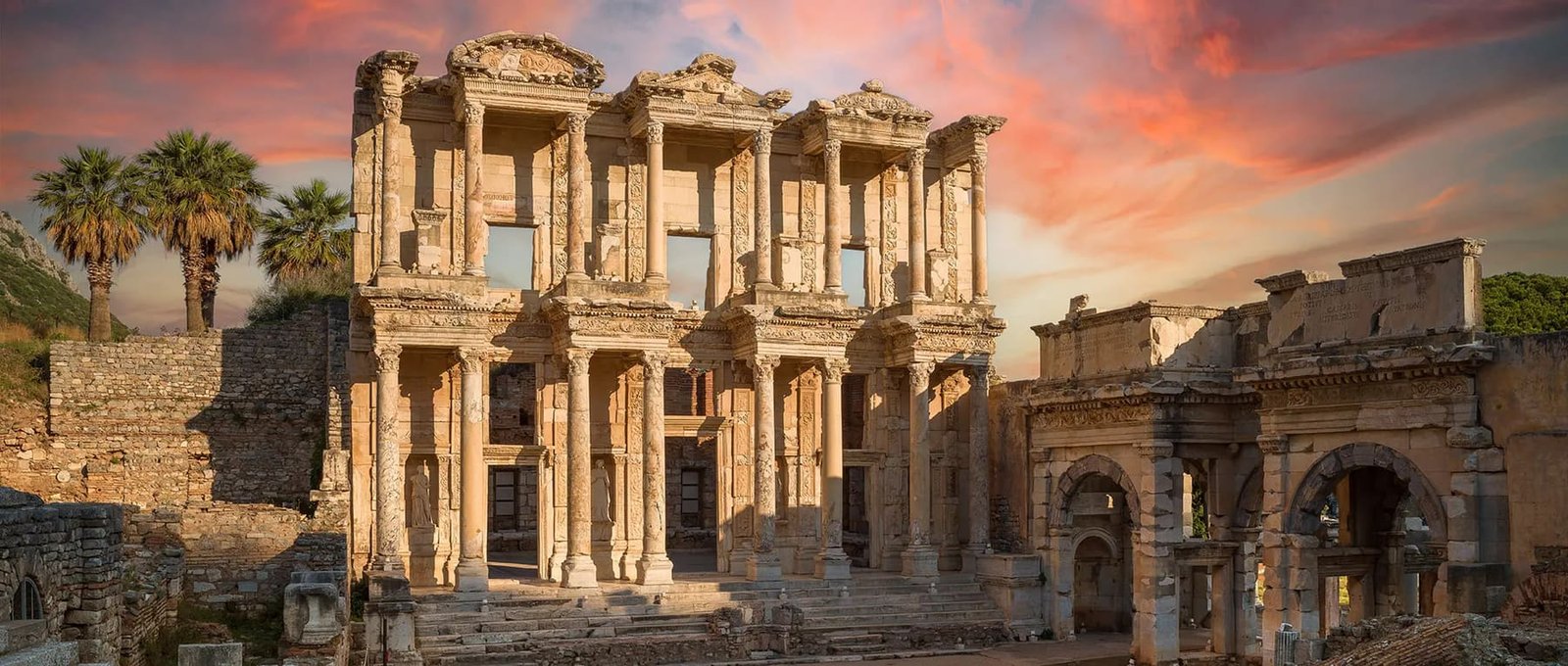
Stand before the Library of Celsus at opening hour
One of the great cities of the ancient Mediterranean, with a two-storey library facade, a theatre that held twenty-five thousand, and terrace houses whose frescoes and mosaics survive under cover.
The library was finished around AD 117 as a monument and tomb for Tiberius Julius Celsus Polemaeanus, a Roman senator buried in a crypt beneath it. It held perhaps twelve thousand scrolls. The facade uses the same trick as the Parthenon — the base curves and the central columns are larger — to make it look bigger than it is.
The Great Theatre is the largest in Türkiye, cut into the hillside and still acoustically effective. Marble-paved Curetes Street runs down between them past the Temple of Hadrian, the public latrines and the fountains.
The Terrace Houses are the part people skip and should not. Under a modern roof, the homes of wealthy Ephesians survive with wall frescoes and floor mosaics largely intact, giving you domestic interiors rather than civic monuments.
Good to Know
Availability, exact timings and pricing depend on your itinerary, hotel and season — your Finders & Keepers Safaris specialist will confirm details and slot this experience into your existing day-by-day plan.
Marble, no shade, and cruise-ship timing
Ephesus takes large groups off the ships at Kuşadası and they arrive mid-morning, so the first hour after opening is a different site entirely. There is almost no shade and the marble paving is polished slick — proper shoes and a hat. The Terrace Houses need a separate ticket and are worth every lira of it.